

Professional Sealcoating Services in Pennsylvania
Sealcoating protects your driveway from the elements and extends its life. At J. Stanley Asphalt Paving, we apply professional sealcoating across Pennsylvania to shield asphalt surfaces from UV rays, water, and fuel spills. We've seen what unprotected pavement looks like after a few winters. Regular sealing keeps that from happening to yours.
Sealcoating Extends the Life of Your Asphalt Surface
We apply a protective layer over your asphalt that acts as a barrier against the things that break it down fastest. UV rays, water seeping into surface cracks, and petroleum-based spills like oil and gasoline all attack the binders that hold asphalt together. Without a seal, those binders weaken over time, and a driveway that could have lasted decades starts showing wear in just a few years. Sealcoating keeps that barrier in place so your surface stays intact and your investment goes further.
How UV Exposure and Water Damage Break Down Unsealed Asphalt
When asphalt goes unsealed, the sun's UV rays cause oxidation that turns the surface gray and brittle. In Pennsylvania and Maryland, freeze-thaw cycles do the rest. Water works into small surface openings, freezes and expands, and turns hairline imperfections into cracks. Those cracks let in more water, and the cycle accelerates. Over a few seasons, what started as surface wear becomes a structural problem. A protective sealcoat breaks that cycle early. It won't fix damage that's already there, but paired with a quality new asphalt driveway installation, it's the most cost-effective way to protect that surface for the long haul.
Our Sealcoating Process Delivers a Clean, Lasting Finish
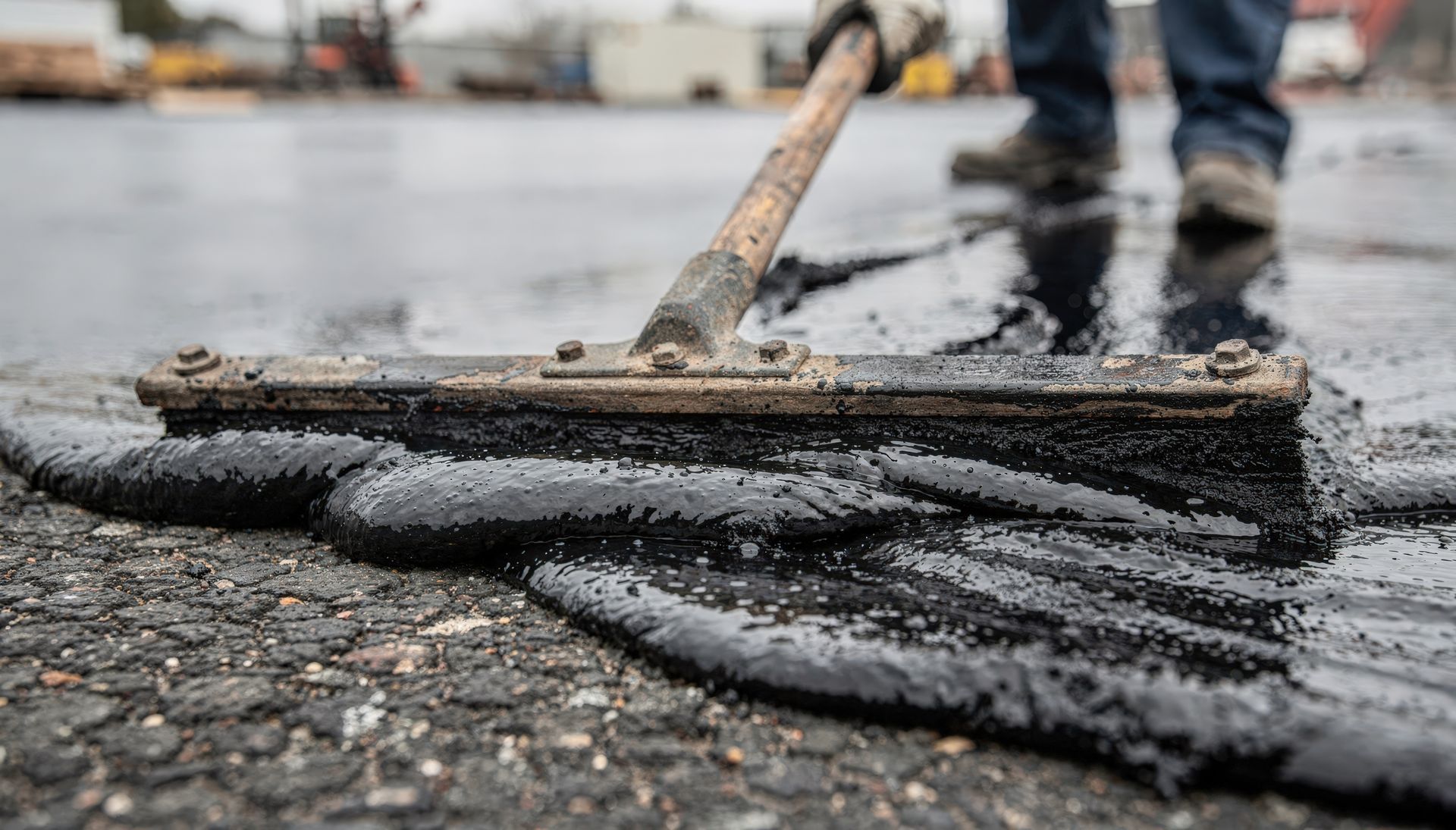
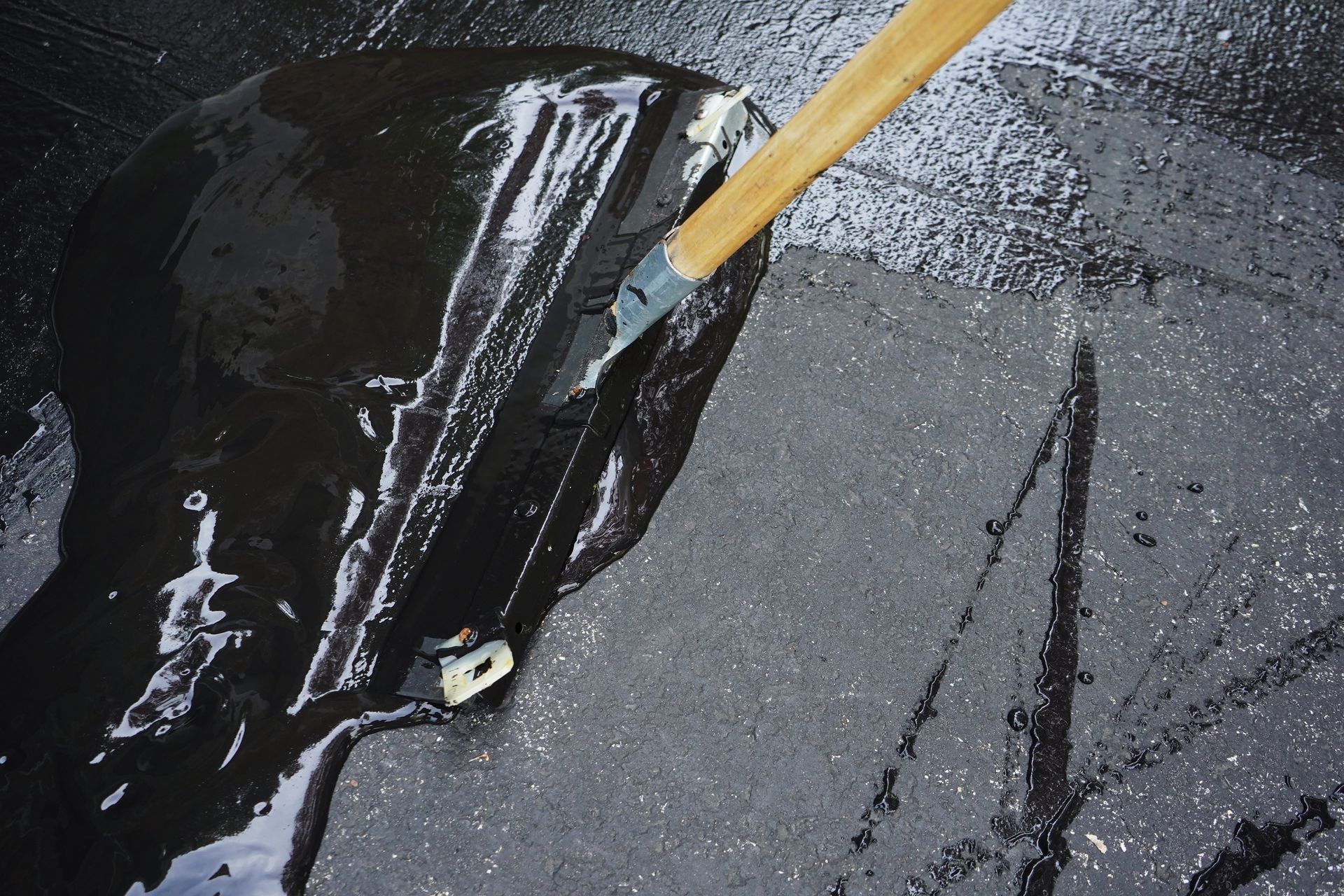
On the day of your appointment, our crew arrives with everything needed to prep and seal your surface in a single visit. We begin by blowing off all loose debris, dirt, and organic material from the entire driveway. Any oil spots get treated with a primer so they don't bleed through the finished sealcoat. We then mask off all edges, garage doors, and surfaces that need to stay clean. Once the surface is ready, we apply the sealant in even passes using a squeegee or spray applicator, depending on the surface condition and layout. We coat the full driveway to a consistent thickness, working from the top down so no section gets walked on before it cures. Depending on conditions, we'll let you know when it's safe to walk or drive on the finished surface.
What Happens Before the Sealant Goes Down
Preparation is what separates a sealcoating job that lasts from one that peels and flakes within a season. We address every oil stain, remove all loose material, and treat any surface imperfections before a drop of sealant touches the driveway. Debris and contamination prevent the sealant from bonding to the asphalt, and a poorly bonded coat won't hold up to traffic or weather. When the prep work is done right, the finished surface cures as a single uniform layer rather than a patchy coating over a dirty base. We also offer tar and chip surface options for customers who want a different texture and appearance. Every application we do starts with the same discipline on prep because that step determines everything that follows.
The Right Time to Sealcoat Your Asphalt Surface
We generally recommend sealcoating every two to three years, though the right interval depends on how much traffic your driveway handles, how much sun and weather exposure it gets, and how old the pavement is. In Pennsylvania and Maryland, freeze-thaw cycles hit surfaces harder than in milder climates. Our winters pull moisture into the pavement and our summers push heat into it, and that combination wears down an unsealed surface faster than the calendar suggests. If your driveway sees regular vehicle traffic, sits in full sun, or is already more than a few years old and hasn't been sealed, we'd recommend not waiting for the three-year mark. Catching it earlier costs less than repairing damage that builds up in the meantime.
How Long to Wait Before Sealcoating New Asphalt
New asphalt needs time to cure before it can be sealed. We typically advise waiting at least 90 days after paving before applying any sealcoat. Fresh asphalt contains oils that need to off-gas through the surface. If you seal too early, those oils get trapped beneath the coating and weaken its bond to the pavement. The sealant won't adhere properly, and you'll see premature cracking or peeling within a short time. The 90-day window isn't a rough estimate. It's a minimum, and in cooler weather it may need to extend a bit longer. If you've recently had a driveway paved and you're planning to seal it, let's schedule an assessment and we'll confirm when the surface is ready.
Common Sealcoating Questions, Plainly Answered
How soon after paving can you sealcoat new asphalt?
We recommend waiting at least 90 days after new asphalt is paved before applying sealcoat. Fresh pavement contains oils that need to cure and off-gas through the surface. Sealing too early traps those oils, which weakens the bond between the sealant and the asphalt. In cooler weather, that curing window may stretch a bit longer. Plan ahead and we'll confirm the surface is ready when you call.
Is it worth having a professional sealcoat a driveway rather than doing it myself?
Professional sealcoating delivers better results and lasts longer than most DIY applications. We use commercial-grade sealant, proper mixing ratios, and application equipment that covers evenly and bonds consistently. Store-bought products vary in quality, and applying them without surface prep or the right tools often leads to a thin, uneven coat that wears off quickly. For a surface you've invested in, professional application is the better value.
What time of year is best for sealcoating in Pennsylvania or Maryland?
Late spring through early fall is the ideal window for sealcoating in PA and MD. Sealant needs air and pavement temperatures above 50 degrees Fahrenheit to cure properly, and it shouldn't be applied when rain is in the forecast within 24 hours. We schedule jobs throughout the warm season, so booking early in spring helps you get on the calendar before summer fills up.
How long does a professional sealcoating job last before it needs reapplying?
A professionally applied sealcoat typically lasts two to three years under normal residential conditions. High-traffic surfaces, heavy vehicle use, or driveways fully exposed to harsh weather may wear sooner. We apply commercial-grade sealant with proper prep, which extends the life of each application. Staying on a regular schedule, rather than waiting until the surface shows obvious wear, keeps your driveway in better shape year over year.
Schedule Your Sealcoating Assessment
Get in touch to book a sealcoating assessment for your driveway or commercial lot. J. Stanley Asphalt Paving serves residential and commercial customers across Pennsylvania and Maryland. We're ready to take a look and give you a straightforward recommendation.