
Commercial Paving in PA and MD
Commercial asphalt paving covers large-scale blacktop installation for parking lots, access roads, loading areas, and commercial driveways. We handle projects across Pennsylvania and Maryland, delivering durable, load-rated surfaces built for consistent vehicle and equipment traffic. Every job starts with a site visit so the finished surface performs for years, not just seasons.
Commercial Asphalt Paving Across Pennsylvania and Maryland
J. Stanley Asphalt Paving provides commercial paving services throughout Pennsylvania and Maryland, including parking lots, commercial driveways, access roads, loading areas, and large-scale blacktop projects. We work with property managers, business owners, and commercial developers who need a crew that shows up on schedule and delivers a surface that holds up under real-world use. Our blacktop paving services cover everything from a small business driveway to a multi-bay commercial lot.
Commercial paving is a different challenge than residential work. The scale is larger, load-bearing requirements are higher, and surface drainage planning determines how well the lot performs over time. Vehicle and equipment traffic influences both the asphalt mix and the base thickness we specify. A properly engineered base and the right mix grade dramatically reduce long-term repair costs for commercial property owners, making the initial investment in a quality spec pay for itself over the life of the surface.
Why Commercial Jobs Demand a Different Approach Than Residential Driveways
Commercial surfaces see daily loading from delivery trucks, forklifts, and high vehicle counts that residential asphalt is never designed to handle. Compaction depth on a commercial base layer typically runs deeper than a standard driveway, and the finished grade must crown or pitch to direct runoff away from the building footprint. Asphalt mix selection for high-traffic areas accounts for load cycles, not just surface smoothness, keeping the lot intact and safe from the start.
Our Commercial Paving Process From Site Assessment to Final Surface
Step 1. Site Assessment and Drainage Planning
Every commercial project starts with a site visit. We assess existing grade, drainage flow, and load requirements before a single piece of equipment arrives. Getting drainage right before any material goes down is what determines how long the surface holds up under vehicle weight and the freeze-thaw cycles that are hard on Pennsylvania and Maryland pavement year after year.
Step 2. Base Preparation and Excavation
With the site plan confirmed, we move into sub-base grading and excavation. Commercial-grade installation requires excavating to a depth that gives the base material room to compact fully. Proper soil preparation and the right base aggregate create the stable platform that keeps the surface from shifting or cracking under repeated loading. Our excavating and site preparation work is handled in-house so the schedule stays on track.
Step 3. Asphalt Installation
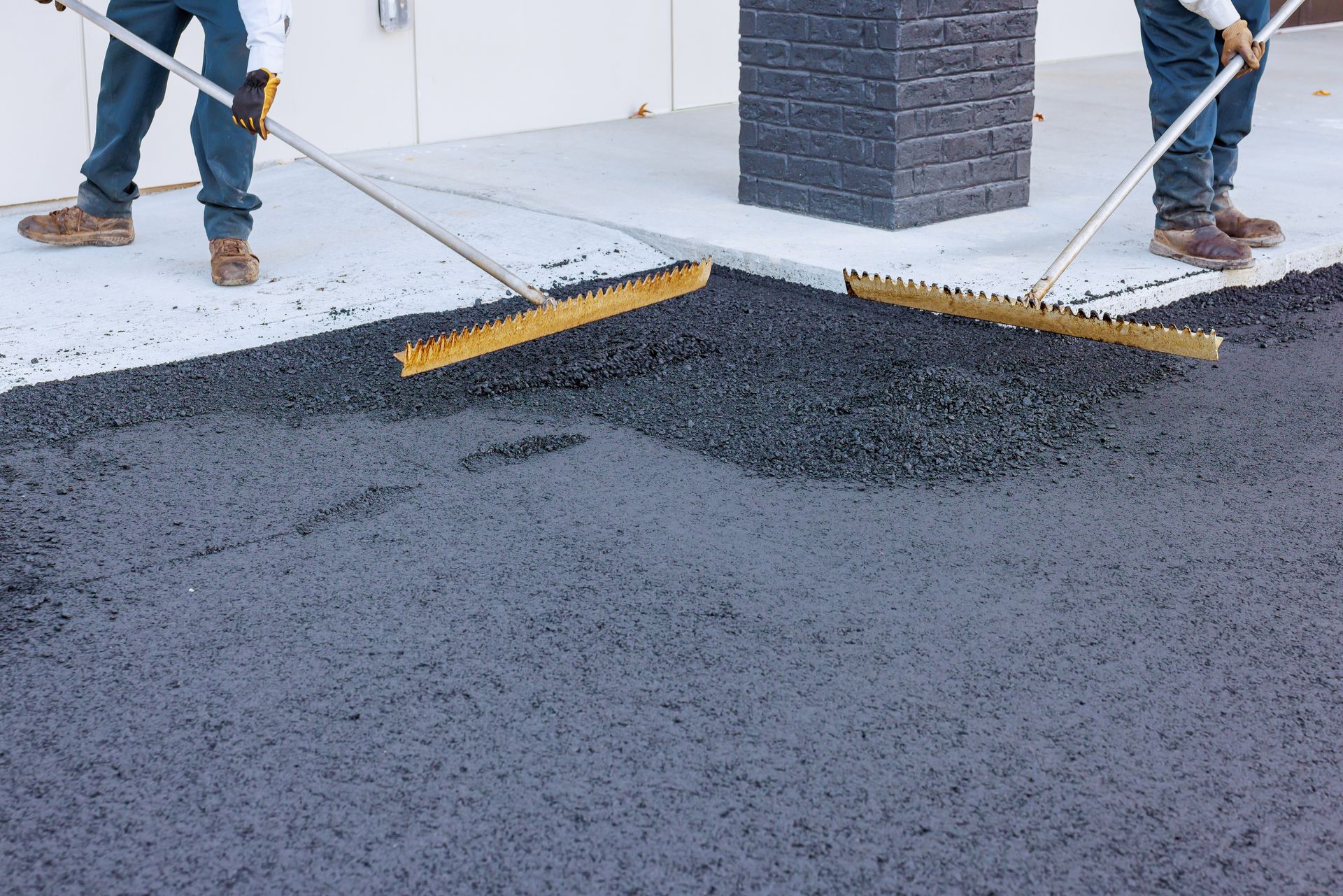
We lay and compact the asphalt mix in lifts, following the thickness and rolling sequence confirmed during the site assessment. The mix is selected for the specific load and traffic type your site requires, whether that is daily delivery trucks or passenger vehicles. Edge detailing is done by hand to create clean, defined boundaries that hold their shape and keep water from undercutting the finished surface.
Step 4. Surface Finishing and Handover
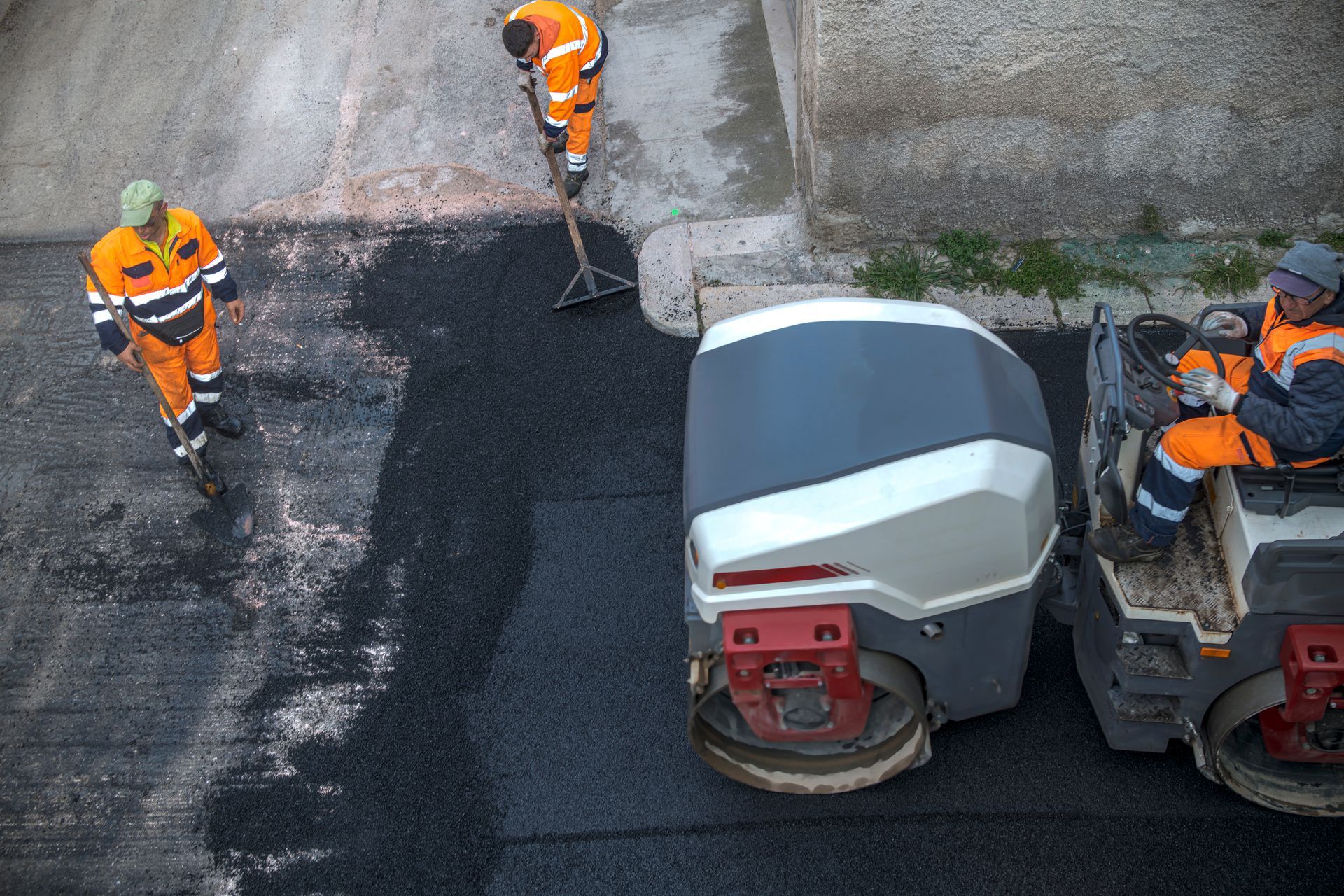
Final rolling passes smooth out any irregularities, and we trim edges to spec before handover. We give you clear cure time guidance so your team knows exactly when the surface is safe to open to vehicle traffic. Scheduling the final phases around your business hours is something we plan for from the start, keeping downtime as short as possible so operations resume quickly.
Keeping Commercial Pavement in Service Longer
A new commercial surface, properly maintained, can last significantly longer than one left untreated. The foundation of that maintenance plan is a regular asphalt sealcoating for commercial surfaces schedule. For most commercial lots, we recommend sealing every two to three years depending on traffic volume and weather exposure. Sealcoating protects the surface from UV oxidation, fuel spills, and moisture infiltration that break down the asphalt binder over time.
Crack repair is a separate, time-sensitive task that should not wait for the next scheduled sealcoat. Small cracks left untreated allow water to enter the base layer, where freeze-thaw cycles force them wider and accelerate base failure across a much larger area than the original crack. We address crack filling as part of ongoing maintenance work before resealing so the sealcoat bonds properly and delivers its full protective life.
Fresh lot lines are the final layer of a well-maintained commercial surface. Clear markings improve traffic flow, support ADA compliance, and signal to customers and employees that the property is actively managed. Taken together, a consistent sealcoating schedule, timely crack repair, and refreshed line marking keep total pavement cost low across a 10 to 15 year surface life.
Common Questions About Commercial Paving Projects
How long does it take to pave a commercial parking lot?
Most standard commercial parking lots take two to four days from final base preparation through surface completion. Project size, site conditions, and the required cure time all affect the overall schedule. We walk through a realistic timeline during the site visit so you can plan around it and keep disruption to a minimum.
Is there a minimum size for a commercial paving job?
We handle commercial projects of varying sizes, from a single business driveway to a multi-bay lot with loading areas. There is no fixed minimum. The best way to find out whether your project is a good fit is to describe it when you call or submit a request, and we will give you an honest assessment and a free estimate.
Can you pave our parking lot without closing our business?
Yes, in many cases. Phased paving lets us work one section at a time so the rest of the lot stays open. Scheduling flexibility means we can start early in the morning or coordinate around your peak hours. We recommend discussing your operational needs during the site visit so the crew can build a plan that works around your business, not against it.
What happens if our current lot has drainage problems?
Drainage issues are assessed during the pre-project site visit and addressed through regrading before any asphalt is laid. Paving over a drainage problem traps the issue under the new surface and shortens its life considerably. Correcting the grade first means the finished surface sheds water the way it should and holds up through Pennsylvania and Maryland winters.
How soon after paving should a commercial lot be sealcoated?
Wait at least 90 days after new asphalt is laid before applying the first sealcoat. Fresh asphalt needs time to fully cure and off-gas before sealant is applied. Sealing too early traps oils near the surface and can soften the pavement. After that initial cure period, we recommend scheduling the first coat and then following a regular two to three year cycle going forward.
Get a Free Commercial Paving Estimate in PA and MD
We offer free on-site assessments for commercial paving projects across Pennsylvania and Maryland. Our team can schedule around your business hours to keep operations running while we plan your project. Reach out today and we will get a site visit on the calendar.